Most B2B ads fail for the same reason: they pitch features to people who aren't ready to buy. That’s why knowing how to create ads content for B2B starts with the customer's problem, not your product. In this guide, we walk through 7 steps, from strategy to testing, with a copy template, a format table, and examples you can adapt. Whether you run a SaaS startup, a technical product, or a service business, you'll leave with a proven process you can repeat.
How To Create Ads Content for B2B in 7 Steps
Step 1: Build Your Ads Strategy for B2B
First and foremost, you need an ads strategy for B2B that says what each campaign is for.
- What do we want from this campaign?
You should choose one of the following three things here: demos, trial sign-ups, or downloads. An B2B ad that tries to get all three at the same time usually gets none.
- Who is it for, and how ready are they?
Someone who has never heard of you needs a different ad than someone who looked at your pricing page last week. Cold audiences want a problem named. Warm ones want proof. On the other hand, hot ones just need an easy offer, such as a free demo or a free plan.
- Where will they see it?
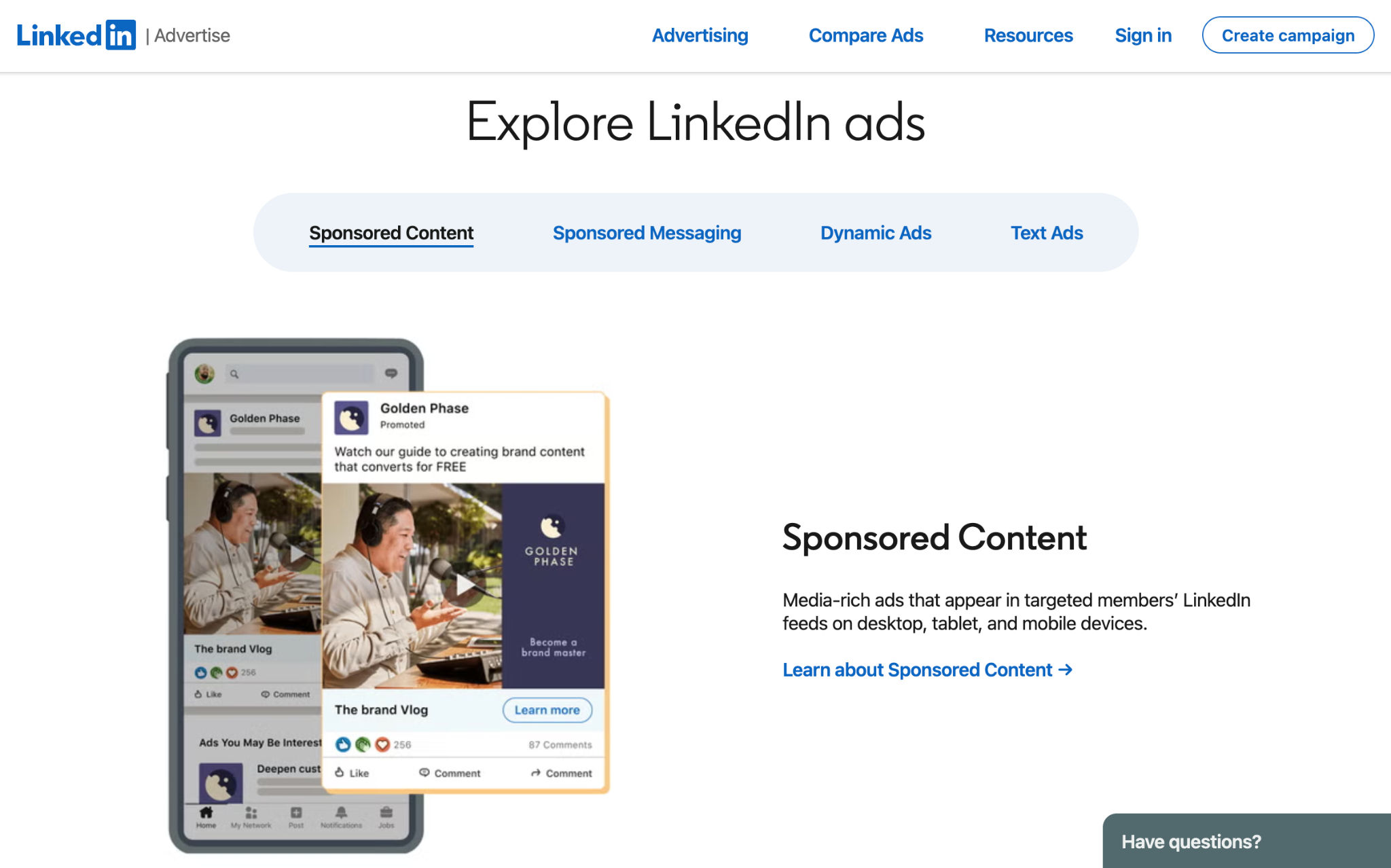
LinkedIn, Google, Meta, and Reddit can all work well, but LinkedIn is considered the most effective channel for most B2B and SaaS teams. Let’s see the telling numbers below:
- Marketers see conversion rates up to 2x higher on LinkedIn.
- 89% of B2B marketers use LinkedIn for lead generation.
- 76% of marketers say LinkedIn is the default channel for thought leadership.
Google catches people already searching. Meta or Reddit are better for retargeting and niche communities. If you're working out the mix, start with a proper go-to-market strategy.
Step 2: Define Your Audience and Core Message
B2B deals rarely come down to one person. The finance lead wants to see ROI, your champion wants their week to get easier, and the end user just wants something that doesn't make them miserable. Therefore, write one message per role instead of one for everybody. It sounds like extra work, but it's often the golden key to generating an ad that gets forwarded.
Then lead with a single pain point, not a feature list. For example, "Advanced reporting dashboard" is a feature. In contrast, "Stop rebuilding the same report every Monday" is a pain someone recognizes instantly. Not sure which pain to lead with your audience? Our guide to pain-point SEO shows how to dig it out of search data and customer conversations.
Step 3: How to Create Ads Content for B2B That Converts
There is no fixed rule for high-converting B2B ad copy, but a simple structure often works.
- Headline: Name the outcome and the pain it removes.
- Body: Pain, solution, proof, in two or three short sentences.
- CTA: One specific next step. "See the 2-min demo" beats "Learn more."
We also have a copy template with a Before/After example to help you see results clearly:
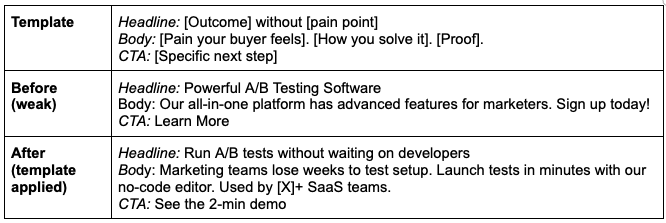
It’s time to notice what changed. The first version could describe any software. The rewrite names a real frustration, promises something specific, backs it up, and tells the readers what happens next. Copy like this also comes easier when your B2B content marketing already speaks your buyers’ intent because the ad can borrow phrasing that has worked in articles.
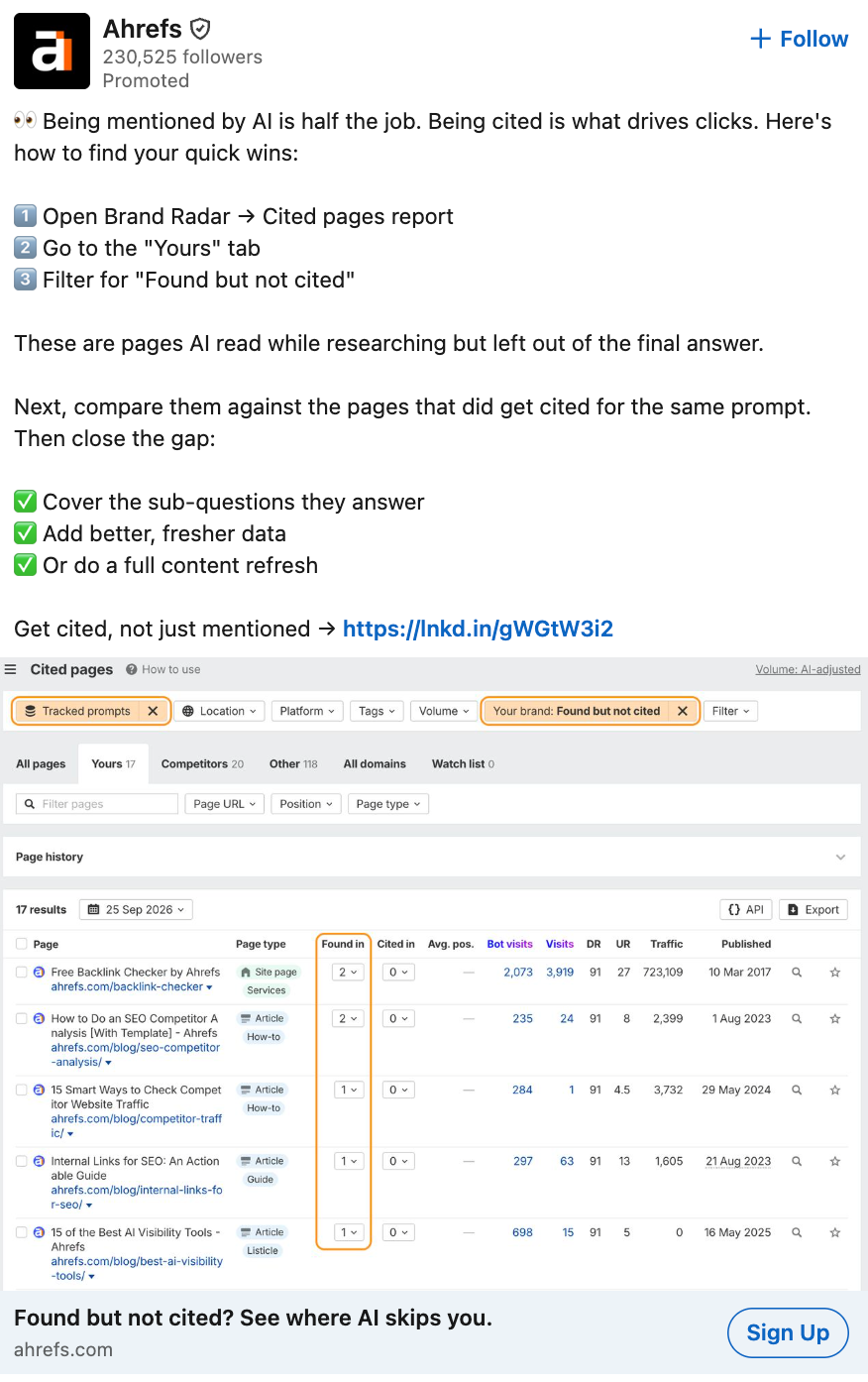
Step 4: Choose Your Ad Format and Design the Creative
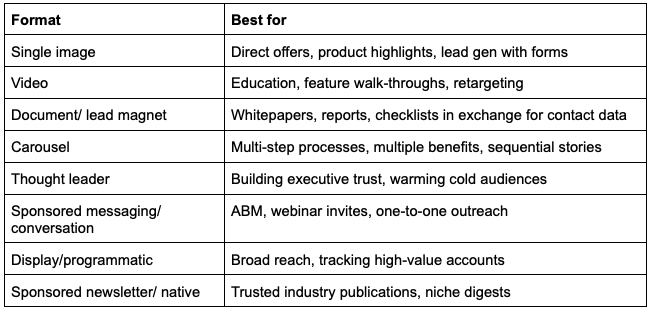
Plenty of teams start with "we should do video" and then go hunting for something to say. In this step on how to create ads content for B2B, we will explore eight common ad formats:
Step 5: B2B Display Advertising
B2B display advertising means placing your ads on websites across the web instead of inside a social feed or search results. Let's be honest about what B2B display ads can and can't do. They rarely win cold leads on their own. Where they earn their keep is awareness and retargeting, keeping you in front of audiences who have already been to your website.
- Targeting: Upload a list of target accounts, add firmographic filters, and retarget your site visitors. If you're going account-first, learning how to run ABM ads goes deeper.
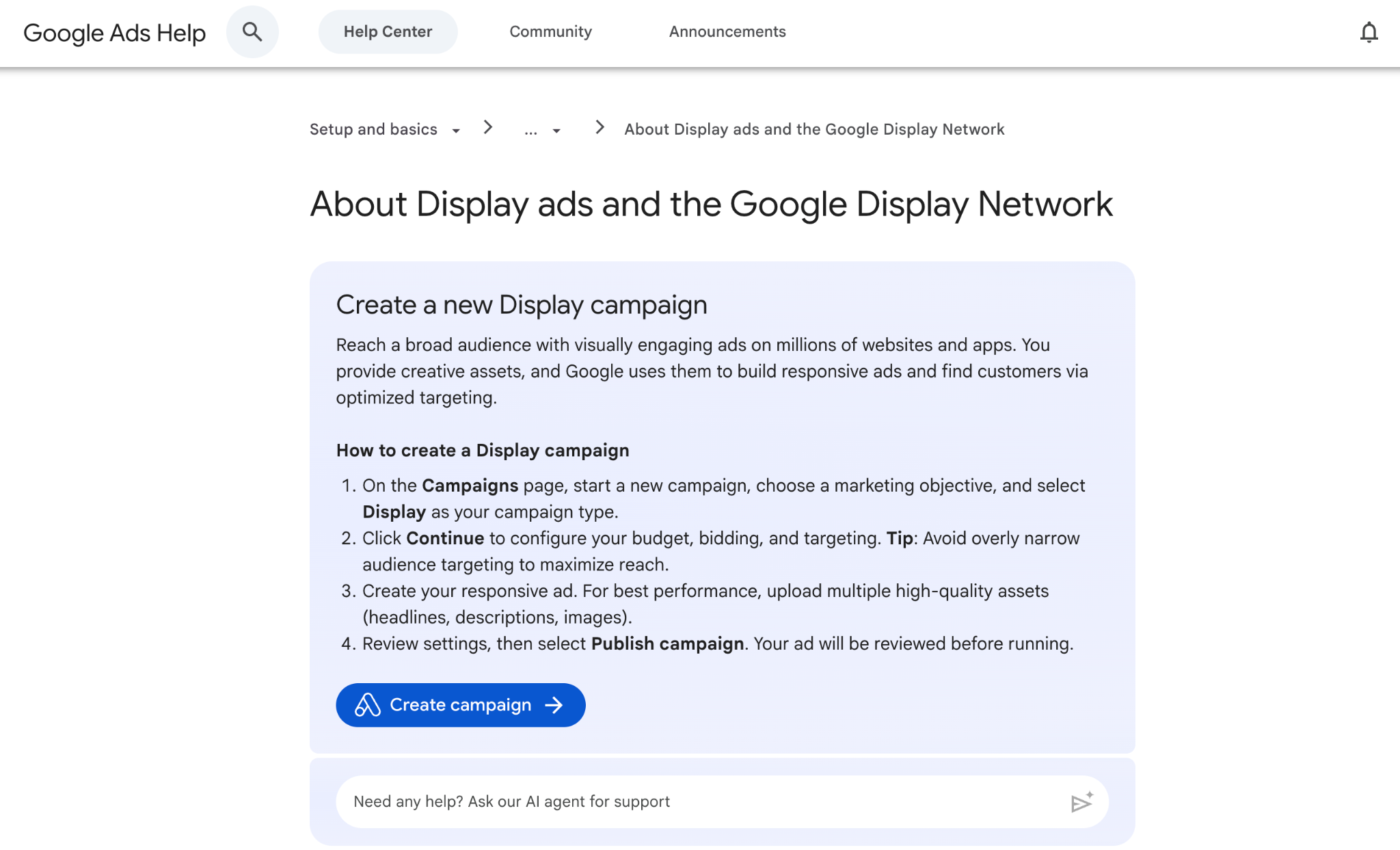
- Placements: The Google Display Network, programmatic platforms (DSPs), and the industry sites or publications where your buyers already read.
- Specs: Common banner sizes include 300x250, 728x90, 160x600, 300x600, and 320x50. Responsive display ads need landscape (1.91:1) and square (1:1) images, plus headlines and a description. Check Google Ads Help for limits before you build.
Step 6: Match the Ad to the Landing Page
Nothing wastes a good click faster than a generic homepage. Therefore, try to mirror the ad's headline on the page, keep a single CTA, and make the form as short as your offer can justify. Additionally, check it on mobile too, since that's where many of your clicks will come from. When leads start arriving, remember to score them so sales calls the right people first.
Step 7: Test, Measure, and Optimize
Keep in mind that change one thing at a time: the headline, the image, the CTA, or the offer. Otherwise, when you change three, you'll never know which one moved the needle. Give each test enough data before you pick a winner, then make that winner your new baseline.
And look past click-through rate. A cheap click that never becomes a lead is just a cheap click. So, track cost per lead, cost per sales-qualified lead, and pipeline created, and review them weekly. Our list of the key metrics every SaaS should track can help you do it better.
5 Mistakes that Waste B2B Ad Spend
Now that you’ve clarified how to create ads content for B2B. However, most wasted budget traces back to a handful of repeat offenders. Let’s check your campaigns against these:
- Leading with features:
Buyers don't wake up wanting "advanced analytics." They want to stop guessing which campaigns work. Thus, let’s open with the problem, and let features show up later as proof.
- Sending everyone to the homepage:
A homepage tries to serve everyone, so it persuades almost no one. Send each ad to a product page, landing page, or something similar repeating its promise and asking for action.
- Targeting too wide:
Reaching 500,000 people sounds impressive until you realize 490,000 will never buy. Narrow by job title or target accounts, and show that smaller audience a sharper message.
- Testing five things at once:
If you swap the headline, image, and offer in the same round, a lift tells you nothing. It’s time to focus on changing one variable, recording the result, then moving on to the next feature.
- Celebrating clicks:
A strong CTR feels good, but it doesn't pay salaries. Follow each campaign past the click to leads and qualified opportunities. If an ad is cheap/click but never produces pipeline, cut it.
FAQs
- What makes a good B2B ad?
A good B2B ad focuses on one pain point, communicates a clear outcome, provides credible proof, and includes a single CTA. It should also align with the buyer's stage in the funnel.
- How is B2B ad content different from B2C?
B2B ads target multiple decision-makers and longer sales cycles. They focus more on credibility and ROI, while B2C ads often appeal to individual needs and impulse purchases.
- How much should I spend on B2B ads?
It’s recommended to start with a test budget big enough to produce meaningful data. Then you can decide to put more behind the campaigns with the lowest cost per qualified lead.
Conclusion
Learning how to create ads content for B2B isn't about a clever trick. It's a process: pick one goal, write for the buying committee, use a proven copy formula, choose the right format, and test everything. For more ways to grow, look at our B2B growth marketing strategies.
If you'd rather not figure it out alone, our team builds and optimizes B2B ads for startups and growth companies. Book a call for a free B2B growth plan, and we'll show you where to start.
Wanna grow with us?
Schedule a call with our growth marketers and we will help you analyze your marketing, product, and metrics. We will present a Growth Plan with strategies to help you increase traffic, and convert better.